
World Cup 2026 Opening Day: Mexico & the Azteca
World Cup 2026 opening day is here — Mexico face South Africa at the Estadio Azteca. Atmosphere, host stakes and how the opener moves market sentiment.
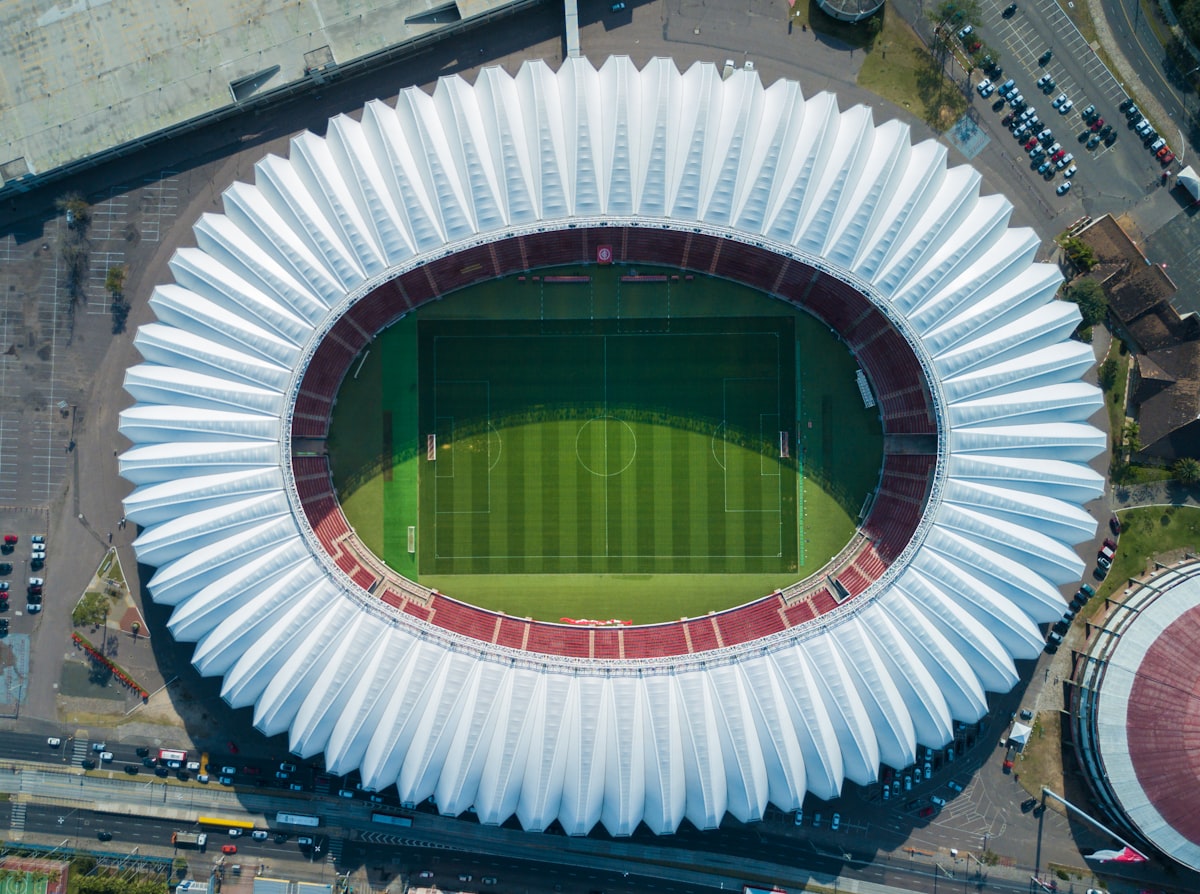
World Cup 2026 opening day has arrived, and it begins exactly where the script demanded: Mexico against South Africa at the Estadio Azteca, the only stadium to have hosted two World Cup finals now opening a third tournament. Today, June 11, the biggest football event ever staged across three nations kicks off in Mexico City with 90,000-plus voices behind El Tri. For 48 teams and 104 matches over the next five weeks, this is the first whistle — and for anyone watching prices on a World Cup prediction market, it is the first real data point of a tournament that has so far been priced entirely on form, friendlies and faith.
An opener is rarely the best match of a World Cup. It is almost always the most loaded. The host nation walks out under the weight of a country's expectation, the underdog smells the chance of a lifetime, and the global audience — much of it tuning in for the first time since 2022 — forms its instant impressions. How Mexico handle that pressure will shape group-stage sentiment for days, and it gives traders a live look at how a market digests reality versus reputation.
The Azteca: Football's Cathedral Reopens
There is no neutral way to describe the Estadio Azteca. It is where Pelé won in 1970 and where Maradona produced both the Hand of God and the Goal of the Century in 1986. Sitting at roughly 2,200 metres above sea level, its thin air has broken visiting legs for half a century. For the third time, FIFA has handed it the opening fixture, and the symbolism is deliberate: the World Cup 2026 schedule was built so the tournament's heart begins beating in the place where so many of its myths were made.
Altitude is not a footnote here. South Africa's players, drawn largely from leagues at or near sea level, face a genuine physiological hurdle inside a hostile bowl of noise. Mexico, who train and play at altitude routinely, hold an edge that does not show up on any talent sheet. It is precisely the kind of contextual factor that sharp traders weigh when they decide how to predict a World Cup match rather than simply backing the bigger name.
The Azteca does not host football matches so much as it hosts occasions. Open a World Cup here and you are not asking a team to win a game — you are asking them to carry a country up two thousand metres and back down again in one piece.
Host-Nation Stakes: What a Win — or a Stumble — Means
Mexico have reached the Round of 16 in seven of the last eight World Cups and then, with brutal regularity, gone out. The fifth game — el quinto partido — has become a national obsession precisely because it has stayed out of reach. Hosting changes the math. A co-host with the Azteca behind them, a favourable group draw and the new 48-team bracket should, on paper, finally deliver the deep run a generation of fans has begged for. Opening day is where that case either gains momentum or starts to wobble.
Why does one match matter so much to sentiment? Because the new 48-team format rewards strong starts. Twelve groups of four feed into a Round of 32, and goal difference plus head-to-head results can decide which third-placed sides advance. A confident, high-margin win over South Africa does two things at once: it banks points and it banks goal difference — both of which traders fold into group-qualification prices within hours.
Here is what the opener can realistically swing in the first 24 hours of the tournament:
- Mexico's group-winner price — a comfortable win firms up their path; a draw or defeat blows the group wide open and lifts every rival's implied probability.
- South Africa's qualification hope — an upset or a hard-fought point against the hosts at altitude would be one of opening day's stories and reprice their entire group.
- Tournament 'host bounce' narrative — early host-nation results historically energise home crowds and feed into deep-run pricing for the United States and Canada too.
- Goal-line and golden-boot flow — the first goals of any World Cup draw outsized attention, nudging early money toward the golden boot race.
How the Opener Shapes Early Market Sentiment
Before a ball is kicked, a prediction market is a poll of expectations. After the opener, it becomes a poll of expectations plus one hard result — and that is when the most interesting movement happens. A market does not just price who won; it prices how they won. A scrappy 1-0 with a ragged Mexican defence tells traders something very different from a dominant 3-0 in which the hosts looked tournament-ready. Understanding that distinction is the core skill behind learning how to read prediction-market odds.
It is worth being precise about what "live" means on PolyBola. Match markets close at kickoff — there is no in-running betting. "Live" here means following live scores as they happen and watching how prices moved beforehand, then carrying that read into the next set of markets that open. When Mexico kick off today, the result reshapes how every later fixture in their group, and the host-nation deep-run pools, are priced for the days that follow.
Opening day also resets the top of the board. With heavyweights like Spain and France clustered around 16% implied probability on prediction markets and England near 11%, early-tournament drama elsewhere can quietly shift those numbers as the field separates contenders from pretenders. These figures are directional and move constantly — they are an implied probability on prediction markets, not a forecast set in stone. For the broader title picture, the winner odds tracker is the place to watch the board breathe.
Why the Crowd, Not the House, Sets the Price
On a parimutuel market the price is the crowd. Every prediction sits in a shared pool, the pool is paid out to those who got it right, and PolyBola takes a flat 5% — so 95% of every pool goes to winners, with no bookmaker shading the line against you. If thousands of traders pile onto a Mexico win after a fast start, the implied probability rises and the potential return compresses; if money flows the other way, it widens. There is no house edge nudging the number, which is exactly why these markets are peer-to-peer and worth reading. If the mechanics are new to you, start with how parimutuel markets work. Availability varies by jurisdiction; 18+; pool-paid, not a sportsbook.
What to Watch Beyond the Azteca Today
The opener headlines the day, but it is the first of a flood. Week-one group fixtures arrive thick and fast for Argentina, England, Germany, Brazil, the Netherlands and Japan, and each first result delivers the same jolt of fresh information the Mexico match does. The fixtures landing earliest tend to set the tone — and the early sentiment — for the rest of their groups. For the full reaction to today's curtain-raiser specifically, our Mexico vs South Africa opening-match preview breaks down the team news and the market read.
If you are following along officially, FIFA's Canada-Mexico-USA 2026 hub carries the live schedule, and ESPN's soccer desk is reliable for team news and post-match analysis as the group stage unfolds. For the analytical view of how the title race is shifting, Nate Silver's World Cup 2026 odds and predictions is a sharp companion to whatever the markets are doing in real time.
Opening day is the moment a tournament stops being a projection and starts being a story. Mexico at the Azteca is the perfect place for it to begin — a host nation, a sacred ground, and a result that will ripple through prices for the next week. Watch the match, then watch the board.
Make your call
Back your prediction in a fair, pool-paid market — 95% of every pool goes to winners.
Trade the World Cup on PolyBolaHowever the opener falls, the Round of 32 is where the real knockout drama begins from June 28 — and the early group results are already shaping it. See how the bracket is forming in our Round of 32 predictions once today's matches are in the books.
Frequently asked questions
What time and where does the World Cup 2026 opener kick off?+
The tournament opens today, June 11, with Mexico against South Africa at the Estadio Azteca in Mexico City. It is the first of 104 matches across Canada, Mexico and the United States, with the final at MetLife Stadium on July 19.
Why is Mexico hosting the opening match again?+
As a co-host nation, Mexico earned the right to play the curtain-raiser, and FIFA chose the Estadio Azteca for its history — the only ground to host two previous World Cup finals (1970 and 1986). Opening the 2026 tournament there gives the event its first match in a stadium woven into the competition's mythology.
Does the Azteca's altitude actually give Mexico an advantage?+
It can. The Estadio Azteca sits around 2,200 metres above sea level, and the thinner air taxes players who train at lower altitudes — South Africa's squad among them. Mexico play and train at altitude regularly, which is a genuine edge that does not appear on any talent comparison but matters over 90 minutes.
How can the opening result change the markets if betting closes at kickoff?+
On PolyBola, individual match markets close at kickoff, so there is no in-play betting. The result still moves sentiment: a convincing Mexico win firms up their group-winner and deep-run prices, while a draw or upset reprices the whole group. You follow live scores, then carry that read into the next markets that open.
How far can Mexico realistically go at a home World Cup?+
Mexico have reached the Round of 16 in seven of the last eight tournaments but rarely gone further. Hosting, a favourable draw and the expanded 48-team bracket give them their best platform in years to finally break past the so-called quinto partido — the fifth game that has long eluded them.
Is the South Africa game an easy win for Mexico?+
Not automatically. South Africa qualified on merit and arrive with nothing to lose, and an opener under enormous home pressure is exactly where favourites stumble. Altitude and the crowd favour Mexico, but openers are notoriously cagey, and an upset would be one of the day's biggest stories.
Make your call
Join PolyBola, fund your balance in USDC, and back your World Cup 2026 call on a live parimutuel market.
Start predicting on PolyBola →Keep reading

Mexico vs South Africa Prediction: World Cup 2026 Opening Match Guide
Preview Mexico vs South Africa in the World Cup 2026 opener, including home advantage, pressure, tactical questions and market angles.
June 9, 2026
World Cup 2026 Schedule & Host Cities: The Complete Guide
Everything you need to know about World Cup 2026 dates, all 16 host cities across the USA, Canada and Mexico, and the key matches to watch.
May 30, 2026
The 48-Team World Cup Format Explained: Groups, Round of 32 & How It Works
32 teams is history. The 2026 World Cup brings 48 nations, 12 groups and a brand-new Round of 32. Here's exactly how the expanded format works.
May 28, 2026