
World Cup Halftime Show 2026: Coldplay, the BBC Snub & the Americanization Debate
The first-ever World Cup halftime show at MetLife has split football: Coldplay headlines, the BBC won't air it, and 82% of US fans love it.
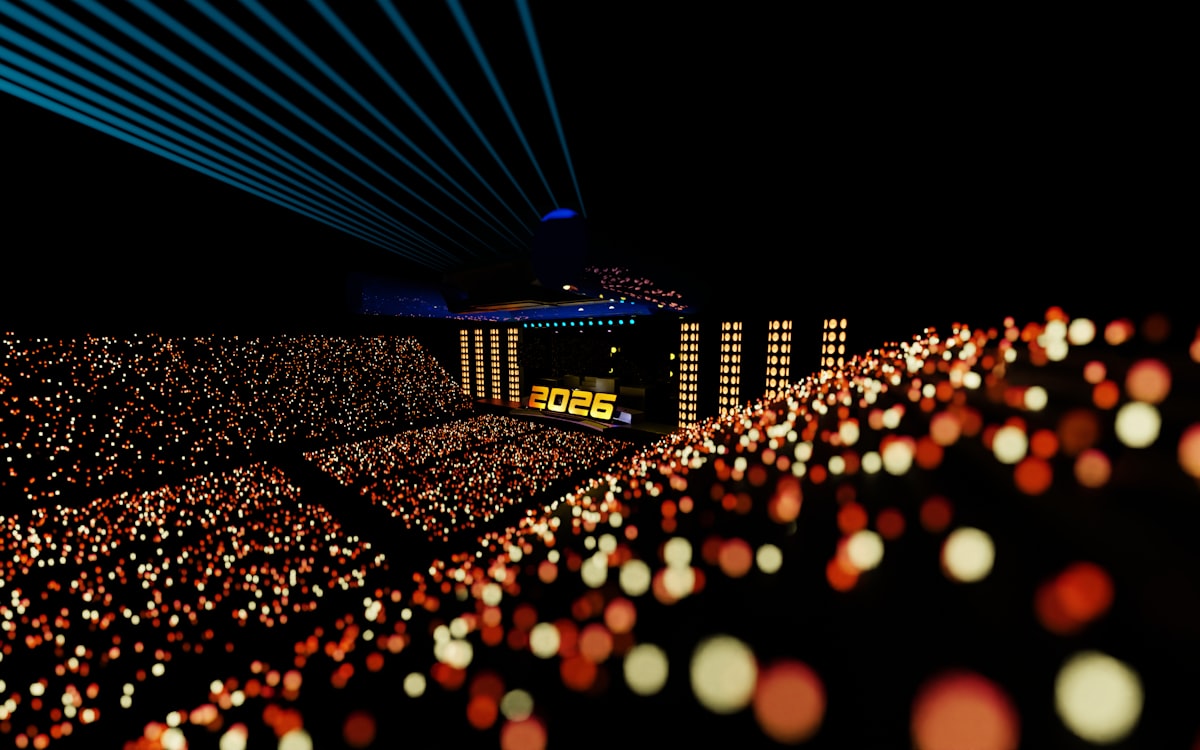
The world cup halftime show 2026 is football's most polarising new tradition — and the tournament hasn't even kicked off yet. For the first time in the competition's 96-year history, the final at MetLife Stadium on July 19 will feature a live entertainment show during the break, with Coldplay reportedly curating the lineup in partnership with Global Citizen. Depending on who you ask, this is either a brilliant evolution that will double the global audience or a crass Americanization that drags football's greatest occasion down to the level of a Las Vegas residency.
The split is not just cultural noise — it has real institutional consequences. The BBC, one of the world's most significant football broadcasters, has publicly rejected plans to air the halftime show, opting for tactical analysis instead. That decision frames the halftime show debate as something more fundamental: a clash over what the World Cup final *is* — a sporting event or an entertainment product. For PolyBola's prediction market traders, this matters beyond aesthetics: the show introduces a genuine tactical variable, a longer break that history suggests can disrupt in-game momentum.
The Coldplay-Global Citizen Partnership
FIFA president Gianni Infantino announced the halftime show initiative in partnership with Global Citizen, the advocacy organisation whose outdoor concerts in New York and elsewhere have become fixtures of the US cultural calendar. Coldplay — one of the world's biggest live acts and a frequent Global Citizen collaborator — are reported to be curating the MetLife performance, selecting headline and supporting acts across a show that is expected to run 15–20 minutes.
The Global Citizen framing is deliberate. By linking the performance to a charitable, international cause, FIFA attempts to position the show as aligned with football's values of global unity rather than pure commercial spectacle. Whether that narrative holds given that FIFA's dynamic pricing has simultaneously priced out global fans from attending is a question FSE has been asking loudly. The two decisions — premium commercialisation of tickets and entertainment-led spectacle at the final — are seen by supporters' groups as two sides of the same coin.
The BBC Snub: What It Signals
Sports Competition News reported that the BBC formally declined to broadcast the halftime performance, choosing instead to fill the break with its traditional tactical discussion, retrospective clips, and expert analysis. This is not a technical decision — it is an editorial statement. The BBC is arguably the world's most respected sports broadcaster, and its refusal to treat the halftime show as part of the event it has paid rights fees to broadcast sends a clear signal: this is not football, it is something else.
The BBC's choice reflects a fundamental tension in how European and American sports cultures relate to live entertainment during events. In the United States, the Super Bowl halftime show has become as culturally significant as the game itself — Rihanna's 2023 performance and Beyoncé's 2013 show generated headlines that dwarfed the football coverage. That model depends on a culture that treats a sporting event as an entire entertainment evening rather than a focused athletic contest. European football culture — especially among the purist, stadium-attending base — treats match broadcasts as windows into competition, not variety shows.
"Unnecessary Americanization of the beautiful game" — European football purists on the World Cup halftime show concept
82% of US Fans Support It — and That Number Matters
A Casino.org survey found that 82% of American respondents support the World Cup halftime show concept. Goal.com reported on the polling and the names in circulation for the performer lineup, with Drake, Kendrick Lamar, and Shakira all linked. That 82% figure matters for FIFA's commercial calculus: the US is one of the three host countries, the US broadcast deal is the single largest rights contract attached to this World Cup, and converting casual American fans into World Cup devotees is a core FIFA objective for 2026 and beyond.
The question is whether growing American audience engagement through entertainment necessarily damages the product for the existing global fanbase. A halftime show that draws 15 additional million US viewers — people who might not otherwise watch a football final — changes the nature of the broadcast. It is more commercially valuable. But it is not the same experience as the pure sporting broadcast that a generation of football fans has grown up with.
The Americanization Debate in Context
CNN's analysis of why purists oppose the halftime show framed the resistance as part of a broader anxiety about the World Cup's direction under Infantino's FIFA. The 48-team expansion, dynamic ticket pricing, and now a Super Bowl-style entertainment injection are seen by critics as a coherent package: football's most-watched tournament being restructured around the preferences and commercial expectations of the American market. For supporters who have attended World Cups for decades, the direction feels like a betrayal of the event's essence. For the 48-team format debate in full, see our companion analysis.
Defenders of the halftime show argue the opposite: that football has always evolved, that attracting a younger and more diverse audience is essential for the sport's growth, and that a 15-minute entertainment segment does not in any meaningful way damage the 90+ minutes of competition. They also point out that the Copa América — held in the US in 2024 — featured Shakira performing at the final, and that match was still Colombia vs Argentina in a proper competitive final.
The Tactical Disruption Question
There is a concrete footballing reason to take the halftime show seriously beyond the cultural debate. At the 2024 Copa América final, Colombia's coach openly criticised the extended half-time break — extended to accommodate Shakira's performance — for disrupting his team's momentum. A standard World Cup halftime lasts 15 minutes. A halftime show could extend that to 25–30 minutes or more. For a team that has just finished the first half with tactical dominance, an extended break allows the opposition to reset, make adjustments, and neutralise advantages that should compound naturally over a 90-minute contest.
This is not hypothetical. In sports where extended breaks occur — American football is the obvious example — coaching staff adjust their game-planning around them. Football coaching has historically not needed to. If the 2026 final features a 25-minute break, the team that better manages the tactical reset will have an advantage that has nothing to do with on-field quality and everything to do with adapting to a non-football variable. That is the kind of asymmetric information that prediction markets are designed to price.
Prediction Market Angles for the Halftime Show
The halftime show creates several distinct prediction-market opportunities that sit outside traditional match-betting. On PolyBola's live markets, you can already trade outcomes related to the World Cup final — and as the show's lineup and format become clearer, ancillary markets around viewership records, broadcast ratings, and even which team leads at half-time (a data point that will now carry additional tactical weight) become more tradeable. Compare PolyBola with Kalshi to see how our parimutuel pool model differs from the binary contract approach.
More broadly, the halftime show and the FIFA ticket pricing controversy are two chapters of the same commercialisation story. Both are about who the World Cup final is being designed *for*. Both have measurable outcomes — ticket accessibility, stadium atmosphere, TV ratings, social media sentiment — that can be traded as predictions. If you want to engage with the World Cup beyond picking a winner, these meta-level questions are where prediction markets offer something genuinely unique.
To understand the full picture of this tournament — venues, travel logistics, and which host city you'd want to be in for the final — our World Cup 2026 schedule and host cities guide is the place to start.
Where the Lines Are Drawn
- FIFA & Global Citizen: halftime show as a statement of football's global, inclusive ambition
- 82% of US fans: support the concept — viewing it through the Super Bowl entertainment lens
- BBC: editorial refusal to broadcast; tactical analysis is more valuable to their audience
- European purists: "Americanization" framing — the show as symptom of a broader commercial direction
- Colombia 2024: real precedent that extended breaks can disrupt in-game momentum and affect results
- FSE / supporters' groups: halftime show and dynamic pricing are inseparable — same FIFA philosophy
PolyBola is a parimutuel prediction market for the World Cup: you stake USDC on outcomes, all stakes pool together, and winners collect pro-rata after a flat 5% fee — no house edge, no bookmaker working against you. *Availability varies by jurisdiction; 18+; markets are pool-paid, not a sportsbook.*
Make your call
Back your prediction in a fair, pool-paid market — 95% of every pool goes to winners.
Trade the World Cup on PolyBolaFrequently asked questions
Who is performing at the World Cup 2026 halftime show?+
Coldplay is reported to be curating the lineup for the July 19 MetLife Stadium final halftime show in partnership with Global Citizen. Names linked to the performance include Drake, Kendrick Lamar, and Shakira, though the full lineup had not been officially confirmed as of June 2026.
Why did the BBC refuse to show the World Cup halftime show?+
The BBC opted to use the half-time break for its traditional tactical analysis and expert discussion rather than broadcast the halftime entertainment. The BBC frames this as an editorial decision: the halftime show is not part of the sporting event they have contracted to broadcast.
Does a World Cup halftime show affect the football result?+
Potentially yes. At the 2024 Copa América final, Colombia's coach criticised the extended break for Shakira's performance, saying it disrupted his team's momentum. A longer-than-standard halftime gives both teams more time to reset tactically, which can neutralise first-half dominance.
What percentage of fans support the World Cup halftime show?+
A Casino.org survey found 82% of American respondents support the concept. European fans are significantly more split, with football supporters' organisations like Football Supporters Europe publicly opposing the initiative as an unnecessary Americanization of the game.
Is the World Cup halftime show connected to the FIFA ticket pricing controversy?+
Many supporters' groups see them as part of the same commercial direction. FSE's Ronan Evain explicitly linked dynamic pricing and entertainment additions as a single policy of turning the World Cup into an exclusive playground for wealthy audiences.
Make your call
Join PolyBola, fund your balance in USDC, and back your World Cup 2026 call on a live parimutuel market.
Start predicting on PolyBola →Keep reading

World Cup 2026 Ticket Prices: FIFA's Dynamic Pricing Scandal Explained
World Cup 2026 ticket prices hit $10,990 for the final, with resale at $33K. Inside FIFA's dynamic-pricing scandal and the AG investigation.
June 9, 2026
World Cup 2026 Schedule & Host Cities: The Complete Guide
Everything you need to know about World Cup 2026 dates, all 16 host cities across the USA, Canada and Mexico, and the key matches to watch.
May 30, 2026
48-Team World Cup 2026: More Drama or Diluted Quality?
The 48 team World Cup: football's biggest structural gamble. Inclusivity and underdog drama versus mismatches, player welfare, and a bloated group stage.
June 9, 2026