
48-Team World Cup 2026: More Drama or Diluted Quality?
The 48 team World Cup: football's biggest structural gamble. Inclusivity and underdog drama versus mismatches, player welfare, and a bloated group stage.

The 48 team World Cup is either the most exciting thing FIFA has ever done or a slow-motion dilution of the greatest sporting event on earth — and as the tournament kicks off on June 11, the argument has never been sharper. Twelve groups, 104 matches, a brand-new Round of 32, and first-time nations like Curaçao and Cape Verde sharing the stage with France, Spain, and Argentina: the 2026 tournament is a genuinely unprecedented experiment. Whether it succeeds is the question every football fan, analyst, and prediction-market trader is wrestling with right now. For the format mechanics — how the groups, third-place advancement rules, and draw procedures actually work — see our World Cup 2026 format explainer. This piece is about the argument: does expansion deliver more drama, or just more football?
The Case for Expansion: Inclusivity, Underdogs, and More to Trade
Start with the most straightforward argument: football is a global sport, and a 32-team World Cup was never truly global. The expansion to 48 brings in nations from every corner of the planet who have spent decades knocking on the door. Curaçao, with a population of roughly 150,000, becomes the smallest nation ever to qualify for a men's World Cup. Cape Verde beat Cameroon to top their African qualifying group. Jordan broke through from Asia. Uzbekistan became the first Central Asian nation to appear at a men's tournament. These are genuine sporting achievements, and they deserve a stage.
The underdog argument is not sentimental noise. Tournament history is built on shocks: the USA beating England in 1950, Cameroon toppling Argentina in 1990, Senegal eliminating France in 2002. More teams means more opportunity for those moments. A nation that would previously have been eliminated in qualifying now gets three group-stage games to build form, confidence, and the kind of collective belief that turns upsets into runs. That is not dilution — that is the structure generating exactly the kind of drama football fans claim to want.
For prediction markets, the arithmetic is equally compelling. Al Jazeera's analysis of the 48-team format noted that 104 matches, 12 groups, and the new Round of 32 create exponentially more tradeable events than a 64-match tournament ever did. Group advancement odds, match outcomes, third-place qualification scenarios — every additional game is a market with real uncertainty. On PolyBola's parimutuel pools you can back your view on any of those events knowing that 95% of every pool goes to winners, with a flat 5% fee and no house edge working against you.
The Case Against: Mismatches, Player Welfare, and Junk Football
The critics are not wrong, either. The honest version of the counter-argument goes like this: Germany playing Curaçao in the group stage is not a competitive football match — it is an exhibition with a predetermined result. A team that draws all three group games can still advance under the best third-place rule, which creates a theoretical incentive to play for draws rather than pursue wins. A bloated group stage crowds out the matches people actually want to watch, and it does so at significant cost to the players who must play through it.
Player welfare is the most serious structural concern. European domestic leagues resume just weeks after the July 19 final at MetLife Stadium. The expansion from 64 to 104 matches means the tournament is simply longer, and elite players — who have already completed a full club season — are asked to go deeper into a North American summer. Injuries sustained in what critics call "meaningless" group-stage mismatches could define or end club seasons. Club managers have been making this argument for years; the 2026 format does not resolve it.
The lower floor of the 48-team field could yield a higher-scoring tournament — but also more lopsided contests. — Nate Silver, Silver Bulletin PELE Model
Nate Silver's PELE model, built specifically to account for the expanded field, captures the tension precisely: more goals is not automatically more drama. A 6-0 group-stage result between an established European power and a first-time qualifier can be a spectacle, but it is not the kind of competitive uncertainty that makes knockout football so addictive. The question is whether the format generates enough genuine toss-up matches to compensate for the games where the outcome is a foregone conclusion.
The 104-Match Question: Volume vs Intensity
FlashScore's impact analysis of the expanded format highlighted a dynamic that is easy to overlook: in a 32-team World Cup, every group-stage game carried implied knockout significance. In a 48-team format with 12 groups, the sheer volume of concurrent matches reduces the perceived weight of individual games. Casual fans face a genuine scheduling problem — 104 matches in roughly five weeks means something is always on, which sounds appealing until you realise that "something" includes fixtures where competitive stakes are minimal.
The counterpoint from expansion supporters is that the new Round of 32 fully restores intensity. Once the group stage ends, you have 32 teams in single-elimination football, and single-elimination football is universally compelling regardless of which 32 teams are involved. From that angle, the 48-team format is simply two parallel events: a broad group-stage tournament for inclusion and commercial reach, followed by a 32-team knockout tournament for drama. Those who dislike the group stage can tune in from the Round of 32 and not miss the part they care about.
Inclusivity vs Quality: A False Choice?
The most thoughtful version of the debate rejects the binary entirely. Inclusivity and quality are not necessarily opposites — they are in tension in specific structural ways that better design could resolve. The tiebreaker system for identifying the eight best third-placed teams is over-complicated in ways that even experienced football journalists struggle to explain. That is not an argument against expansion; it is an argument that the rules need simplifying. Similarly, the player welfare concern is real but addressable: FIFA could mandate longer rest windows or restrict squad call-up periods. That they have not done so is a governance failure, not proof that 48 teams cannot work.
What is clear is that the debutant nations who qualified because of expansion are not passengers — they are stories. Cape Verde's qualification over Cameroon was competitive football at its finest. Uzbekistan becoming the first Central Asian nation at a men's World Cup is a genuine historical moment. Those stories generate search traffic, social media engagement, and prediction-market volume in low-competition keyword niches that barely existed before this tournament.
What the Prediction Markets Reveal
Perhaps the most honest judge of the expanded format's effect is what prediction markets do with it. On PolyBola, early-round markets on matches between mismatched sides trade at high implied probabilities for the stronger team — occasionally above 90% — confirming that yes, some games are not competitively priced. But the same markets show meaningful uncertainty in dozens of other fixtures: group tiebreakers where any of three teams could advance, Round of 32 clashes between evenly matched sides, and outcome markets where the spread of possibilities is genuinely wide. The market, in aggregate, is saying that the expanded tournament is a mix — some foregone conclusions alongside plenty of genuine contests.
If you want to turn that analysis into a position, PolyBola's parimutuel pools are built for exactly this kind of granular thinking. You are not betting against a bookmaker with a built-in margin — you are in a pool with other traders, and the 95% payout rate means the market is as close to fair as prediction markets get. See how we compare on our PolyBola vs Polymarket and PolyBola vs Kalshi pages. *Availability varies by jurisdiction; 18+; PolyBola markets are pool-paid, not a sportsbook.*
The Verdict: Drama Wins — Just
The honest answer is that the 48-team World Cup will produce more drama and more dilution simultaneously. There will be heavy group-stage defeats that look ugly in the highlights package. There will also be upsets nobody saw coming, debuts that generate global headlines, and a Round of 32 that is pure knockout football from the first whistle. The experiment is not perfect. But it is live, it is running, and by July 19 at MetLife Stadium we will have actual evidence rather than projection. The prediction market for the format's success is wide open — and that might be the most interesting market of all.
Make your call
Back your prediction in a fair, pool-paid market — 95% of every pool goes to winners.
Trade the World Cup on PolyBolaFrequently asked questions
Why did FIFA expand the World Cup to 48 teams?+
FIFA expanded the tournament to increase global representation, generate more commercial revenue, and give more confederations — particularly Africa, Asia, and CONCACAF — larger allocations. The 48-team format was approved in 2017 and first used at the 2026 tournament, which features 12 groups of four and 104 total matches.
How does the 48-team World Cup format work?+
The 2026 World Cup has 12 groups of four teams. The top two from each group (24 teams) plus the eight best third-placed teams advance to the new Round of 32. From there it is single-elimination through to the final at MetLife Stadium on July 19. See our full explainer at /blog/world-cup-2026-format-explained for the complete breakdown including tiebreaker rules.
Does the 48-team format make it harder for the best team to win?+
Slightly, yes. More teams means more potential for upsets, more matches to navigate, and greater variance overall. Nate Silver's PELE model notes the expanded field lowers the floor of competition but also widens the range of outcomes. Prediction markets reflect this with somewhat wider spreads on outright winner odds compared to a 32-team tournament.
How many matches are in the 2026 World Cup?+
The 2026 World Cup features 104 matches in total — up from 64 in the 2022 Qatar edition. The increase comes from 48 teams (vs 32), 12 groups (vs 8), and the addition of the Round of 32 knockout stage.
Can a team that draws all group games still qualify at the 2026 World Cup?+
Yes. Third-placed teams can advance if they are among the eight best third-place finishers across all 12 groups. A team with three draws and a reasonable goal difference could theoretically qualify — which critics argue reduces the incentive to win group-stage games outright.
How do prediction markets price 48-team World Cup matches?+
Prediction markets like PolyBola price each market based on pooled trader sentiment. Heavy mismatches trade at high implied probabilities for the favourite. Genuine toss-up matches and group-stage advancement scenarios show much wider probability distributions. On PolyBola, 95% of every pool goes to winners after a flat 5% fee — settled in USDC on Polygon.
Make your call
Join PolyBola, fund your balance in USDC, and back your World Cup 2026 call on a live parimutuel market.
Start predicting on PolyBola →Keep reading
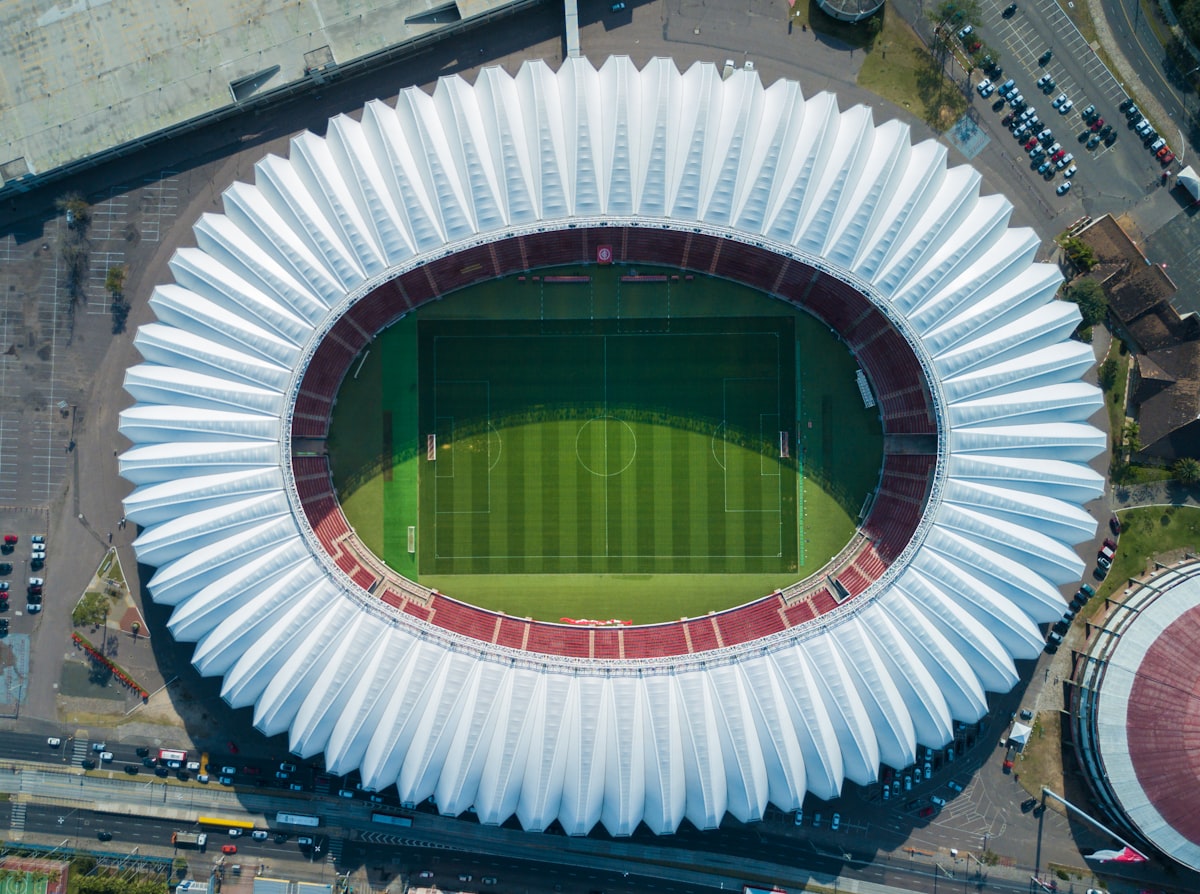
The 48-Team World Cup Format Explained: Groups, Round of 32 & How It Works
32 teams is history. The 2026 World Cup brings 48 nations, 12 groups and a brand-new Round of 32. Here's exactly how the expanded format works.
May 28, 2026
World Cup 2026 Debutants: Cape Verde, Curaçao, Jordan & More
World cup 2026 debutants Cape Verde, Curaçao, Jordan, and Uzbekistan make history. Meet the first-timers, their groups, and their dark-horse odds.
June 9, 2026

World Cup 2026 Dark Horses: Underdogs That Could Shock the World
The 48-team WC2026 format opens new paths for underdogs. We pick the dark horses with the best chance to shock the favourites — and the markets to back them.
May 24, 2026