
World Cup Prediction Market Boom: $1.7 Billion and Counting
The world cup prediction market has never been bigger. Over $1.69B traded on Polymarket alone, Kalshi's $1M contest, and where PolyBola fits in.
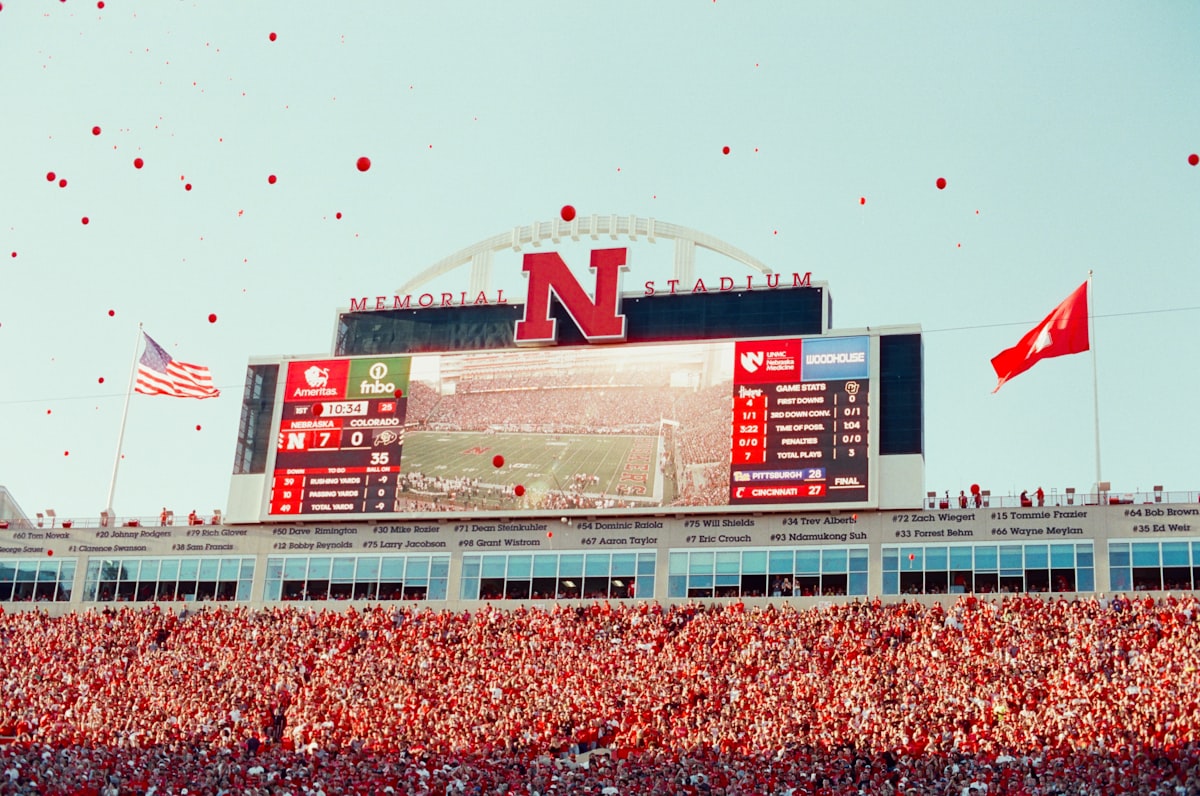
The world cup prediction market has arrived at a scale that would have been unthinkable four years ago. As of June 7, 2026, Polymarket's flagship World Cup Winner contract had traded $1,687,375,943 -- just under $1.69 billion in a single market -- making it the most-traded political or sports event in the history of decentralised prediction markets. And the tournament hasn't even kicked off yet.
This isn't a niche corner of crypto anymore. Mainstream sportsbooks, regulated US exchanges, and a new generation of parimutuel platforms have all piled into World Cup 2026 predictions. If you want to understand where the smart money is pointing -- and how to participate without a house edge working against you -- read on.
The Numbers Behind the Boom
The $1.69B Polymarket figure is realised volume -- actual trades settled on-chain as of June 7, per Polymarket's own market page. It is not a projection. Polymarket also hosts 80+ separate World Cup markets covering match results, group winners, top scorers, and novelty outcomes -- so the true Polymarket ecosystem volume is considerably higher than the flagship contract alone.
Beyond Polymarket, analyst projections paint an even larger picture -- though it is important to label them as exactly that. DeFi Rate's live odds tracker estimates total cross-platform volume will clear $2.5 billion, with roughly $1.47 billion attributed to Kalshi. RotoWire projects $2.37 billion in total US prediction market trading on the tournament. These are forward projections from analysts, not settled figures -- treat them accordingly.
The macro context explains the surge. Pew Research reported that combined monthly global prediction market volume jumped from under $5 billion in September 2025 to approximately $24 billion by April 2026 -- a nearly five-fold increase in eight months. The World Cup has arrived at the exact moment prediction markets reached mainstream credibility.
Kalshi's $1 Million Contest and the Regulated Push
Kalshi -- the CFTC-regulated prediction exchange -- made a headline-grabbing move by launching a free-entry Soccer Cup contest with a $1,000,000 prize pool, designed to pull in users who might not otherwise stake real money on event contracts. It is a calculated land-grab in what is shaping up to be the most competitive prediction market acquisition cycle in the category's history.
Kalshi is not alone. OG.com, Fanatics Markets, and Crypto.com's Underdog Predict have all entered the space. MLS even formalised a partnership with Polymarket for the 2026 season, a telling sign that traditional sports organisations now view prediction markets as legitimate distribution channels rather than fringe competitors. See how the platforms compare in our full PolyBola vs Kalshi breakdown and PolyBola vs Polymarket comparison.
What the Implied Odds Are Saying
Implied probabilities in prediction markets are a real-time read on collective expectation -- and they move constantly as team news, injury reports, and group draw implications filter through. As of early June 2026, the picture looks like this across the major platforms:
- Spain ~16% implied -- reigning European champions, Lamine Yamal leading a deep squad
- France ~16% implied -- Mbappe, two consecutive finals, unmatched squad depth
- England ~11% implied -- Kane and Bellingham driving genuine knockout-round pedigree
- Argentina (defending champions) -- odds have fluctuated from 22% to 11% post-draw as the field clarifies
- Brazil ~9% implied -- Vinicius Jr. and a reshaped attacking core, 24-year title drought
These figures are directional and change with every news cycle. Prediction market odds are most useful as a starting point for analysis, not a final verdict. For a deeper read on the contenders, see our World Cup 2026 favorites breakdown.
Prediction Markets vs Sportsbooks: Why the Distinction Matters
Much of the $1.7B-and-growing volume is flowing through platforms that work very differently from traditional sportsbooks. In a sportsbook model, the house sets lines with a built-in margin -- every bet is placed against the bookmaker's position, and the vig comes off every transaction. In a prediction market, traders take positions against each other, and the market price emerges from the collective weight of money on each side. For a full comparison of the models, our prediction markets vs sportsbooks guide goes through the mechanics in detail.
In a parimutuel pool, there is no house edge baked into every line. The fee is flat and transparent. Winners split the pool. That structural difference matters a great deal over a long tournament.
Where PolyBola Fits
PolyBola is a parimutuel prediction market -- which is a subtly but importantly different beast from the order-book platforms like Polymarket or the exchange-style contracts on Kalshi. Here is how it works in practice: every participant stakes USDC on an outcome (Yes/No on a match result, or a choice in a multi-way market). All stakes flow into a single pool. After the event settles, the winning side splits the entire pool pro-rata -- with a flat 5% fee taken up front. That means 95% of every pool goes to winners, with zero house position working against any individual bet.
The practical benefits are meaningful. There is no bid-ask spread to eat into your position, no market maker profiting from your uncertainty, and no single-sided pool risk (those refund). Everything is settled in USDC on Polygon -- transparent, on-chain, verifiable. Read the full mechanics at /how-it-works.
In a cycle where $1.7 billion has flowed through a single Polymarket contract, and analyst projections point to $2.5 billion in total platform volume, the question for any serious prediction market participant is no longer whether to engage with World Cup markets -- it's where. PolyBola's flat-fee, pool-paid structure is built specifically for football fans who want fair odds and clean settlement. Explore live World Cup markets on PolyBola, check the leaderboard to see how top traders are positioning, or sign up to get started.
The Category Is Just Getting Started
The 2026 World Cup is the first major global sporting event to coincide with prediction markets at genuine scale and regulatory legitimacy. The numbers -- $1.69B realised on one Polymarket contract, $24B monthly global volume, a $1M Kalshi contest -- are not a ceiling. They are a benchmark. Every four years the World Cup resets the record books; prediction markets just joined that tradition.
For deeper context on the platforms competing for this volume, the Sports Illustrated roundup of best World Cup prediction market apps is a useful independent reference. And if you want to understand the pitch-quality concerns that some traders are factoring into home-team advantage markets, our World Cup 2026 pitch quality analysis covers the engineering behind the stadium grass conversions in full.
*Availability varies by jurisdiction; participants must be 18+. PolyBola markets are pool-paid and parimutuel -- not a sportsbook. Nothing here constitutes financial advice.*
Make your call
Back your prediction in a fair, pool-paid market -- 95% of every pool goes to winners.
Trade the World Cup on PolyBolaFrequently asked questions
How much has been traded on World Cup prediction markets in 2026?+
Polymarket's flagship World Cup Winner contract alone had traded $1,687,375,943 (approximately $1.69 billion) as of June 7, 2026 -- realised on-chain volume per Polymarket. Analyst projections from DeFi Rate and RotoWire estimate total cross-platform World Cup volume could reach $2.37-2.5 billion by the end of the tournament, but those are forward projections, not settled figures.
What is Kalshi's World Cup offering?+
Kalshi, a CFTC-regulated prediction exchange, launched a free-entry Soccer Cup contest with a $1,000,000 prize pool to attract new users ahead of the tournament. It also runs regulated World Cup event contracts. See PolyBola's full comparison at /vs/kalshi.
Who are the favourites to win the 2026 World Cup according to prediction markets?+
As of early June 2026, Spain and France are co-leaders at roughly 16% implied probability each, followed by England (~11%), Argentina, and Brazil (~9%). These figures move constantly -- check /blog/world-cup-2026-favorites for a current breakdown.
How is PolyBola different from Polymarket or Kalshi?+
PolyBola uses a parimutuel pool model: all stakes go into one pool, and winners split it pro-rata after a flat 5% fee. There is no house edge, no bid-ask spread, and no bookmaker position against you. See the full comparison at /vs/polymarket and /vs/kalshi, or read /how-it-works.
Are prediction market winnings real money?+
Yes. PolyBola markets settle in USDC on Polygon. Winnings are real cryptocurrency, withdrawable after settlement. Availability varies by jurisdiction; participants must be 18+.
Why have prediction market volumes surged so much in 2026?+
Pew Research reported that global monthly prediction market volume jumped from under $5 billion in September 2025 to roughly $24 billion by April 2026, driven by regulatory clarity in the US (Kalshi's CFTC registration), mainstream media coverage, and the gravitational pull of the World Cup as the world's largest single sports event.
Make your call
Join PolyBola, fund your balance in USDC, and back your World Cup 2026 call on a live parimutuel market.
Start predicting on PolyBola →Keep reading

World Cup 2026 Favorites: Who Will Win? (Odds, Contenders & Analysis)
France, Spain, England, Brazil, Argentina — who lifts the trophy in July? Full odds breakdown and contender analysis for World Cup 2026.
June 2, 2026

Prediction Markets vs Sportsbooks: A Smarter Way to Forecast the World Cup
Sportsbooks set odds to profit. Prediction markets aggregate what crowds actually believe. Here's why that difference matters for World Cup 2026.
May 25, 2026
World Cup 2026 Pitch Quality: The Senegal Viral Clip, Fact-Checked
World cup pitch quality fears went viral after the Senegal ball-bounce clip. France 24 debunked it -- here's the real engineering story behind 8 stadium conversions.
June 9, 2026