
World Cup 2026 Pitch Quality: The Senegal Viral Clip, Fact-Checked
World cup pitch quality fears went viral after the Senegal ball-bounce clip. France 24 debunked it -- here's the real engineering story behind 8 stadium conversions.
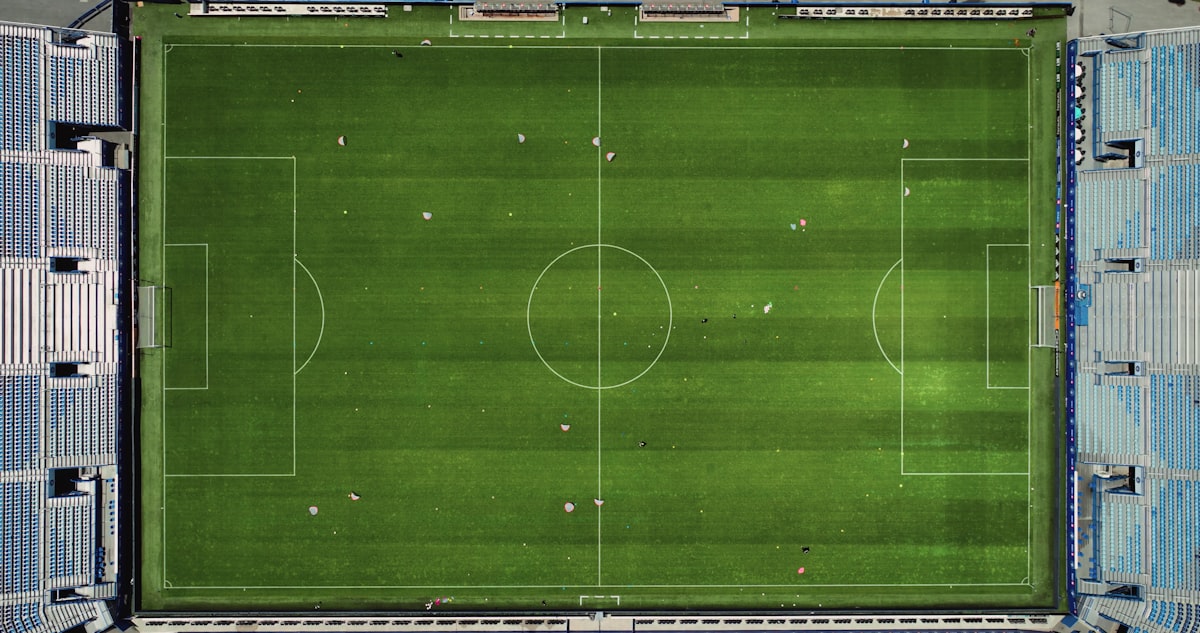
World cup pitch quality became the hottest debate in football long before a competitive ball had been kicked in anger at the 2026 tournament. The trigger: a short video clip of Senegal's national team training, in which players repeatedly drop footballs onto the pitch surface and watch them thud to an almost dead stop. Within 48 hours it had racked up millions of views, spawned hundreds of outraged posts, and prompted a cascade of headlines declaring the 2026 World Cup pitches unfit for elite football.
The reality is more interesting -- and considerably more reassuring -- than the viral panic suggested. To understand it, you need to know what those pitches actually are, how they got there, and what the engineers who built them say about their readiness.
The Senegal Clip: What Actually Happened
France 24's fact-check established the critical context that the viral clip's sharers omitted: the footage was filmed during an early setup phase, when the pitch was not yet in match-ready condition. The grass had been laid but not yet compacted, irrigated, and brought to the density required by FIFA's playing surface standards. FIFA subsequently confirmed that all 16 World Cup venues had passed its performance certification -- the standardised tests for ball roll, bounce consistency, and surface hardness that every host stadium must clear before a match can be played.
The damage to public perception, however, was already done. Prediction market traders began pricing in injury-risk and low-scoring outcomes for certain venues; football analytics communities debated whether artificial-turf-converted surfaces would favour defensive, less-technical teams. The clip had taken on a life entirely detached from its factual context -- a useful illustration of how sporting narratives form in the social media era.
Why Eight Stadiums Needed Converting at All
The core of the story is this: eight of the 16 World Cup venues -- seven in the United States and one in Canada -- are NFL or soccer stadiums that normally play on artificial turf. FIFA's regulations prohibit artificial surfaces at the World Cup. So all eight had to be converted to natural grass before the tournament. This was not a last-minute scramble; it was an engineering programme that in some cases began nearly a decade ago.
The AP's detailed report via Phys.org and RTE Brainstorm's breakdown by the turfgrass scientists themselves make clear that this was a genuine feat of applied agronomy. Turfgrass researchers from the University of Tennessee and Michigan State led the programme. Two distinct grass blends were specified for different climate zones: Bermuda grass for the warmer southern venues (Dallas, Houston, Miami, Los Angeles), and a Kentucky bluegrass/perennial ryegrass mix for cooler northern venues (New York/New Jersey, Seattle, Kansas City, Toronto).
MetLife Stadium: Two Feet of Sand and a Full Irrigation System
MetLife Stadium -- the New York/New Jersey venue hosting the July 19 final -- is perhaps the most striking example of the engineering scale involved. The conversion required burying the existing artificial surface under two full feet of sand substrate, then installing a drainage layer, a ventilation system, hybrid fibre reinforcement (a woven mesh that locks grass roots in place under heavy use), and a full irrigation network. The result is effectively a purpose-built pitch placed on top of an NFL stadium floor.
Seattle's Lumen Field: The Test Bed
Seattle's Lumen Field was among the first venues to complete its conversion, and was used as a test case for the broader programme. The US women's national team played the first competitive matches on the new surface, providing real-world data on how the grass held up under match conditions and heavy foot traffic. LawnStarter's overview of the US conversions documents the timeline across all eight venues.
The Hybrid Challenge: Neither Purely Natural Nor Artificial
The technical reality that NPR explored in depth is that these surfaces are not purely natural grass -- they are hybrid systems. Synthetic fibres are threaded into the sand base to stabilise the grass roots, a technique widely used in Premier League and Champions League stadiums to extend pitch life under high usage loads. The fibres are not visible at the playing surface, but they affect how the ball interacts with the turf, particularly in the early days after installation before the natural grass has fully knitted together.
This is almost certainly what the Senegal clip captured: a surface in a transitional state, before the natural grass had reached the compaction and root-density required by FIFA standards. It was not a picture of match-day conditions -- it was a snapshot of an incomplete installation.
The pitches are the result of years of engineering work by turfgrass scientists. What the viral clip showed was a pitch mid-installation -- not a finished match surface. -- AP / Phys.org report, June 2026
Does Pitch Quality Actually Affect Match Outcomes?
Even if every surface is certified match-ready -- and FIFA says they are -- the question of whether pitch type and quality influences results is a legitimate one for prediction market analysis. The evidence from other tournaments on converted or hybrid surfaces suggests a few consistent patterns:
- High-press, high-tempo teams (England, Germany, France) tend to be more affected by surface variance than technically precise possession sides like Spain, because their game plan relies on second-ball recovery and intense pressing sequences that demand consistent bounce.
- Teams accustomed to artificial turf at club level -- several Scandinavian and North American sides -- may actually carry a surface-familiarity edge at certain venues.
- Injury risk on newly-laid hybrid surfaces is marginally higher in the first few weeks of heavy use, as root systems stabilise. This is a real, if small, factor worth tracking.
- Home advantage for the host nations (USA, Mexico, Canada) is amplified at specific venues where those teams play, including familiarity with local climate and grass type.
The Prediction Angle: Surface Conditions as a Market Signal
For anyone trading World Cup markets on PolyBola, pitch quality is a second-order signal -- most impactful when combined with other factors. A team like Spain, whose passing game thrives on a true, consistent surface, may carry a slight additional edge at well-established venues. A side known for physical intensity might face modestly higher injury exposure at venues where the pitch is in its first weeks of match use. These are not certainties, but at the margin, when markets are close, they can tip the analysis.
The broader home-advantage question is equally live. The three host nations each play a significant portion of their group-stage schedule on home soil. Our World Cup 2026 favorites analysis discusses how that structural advantage is priced into current markets. And if you want to understand the scale of prediction market volume that these narrative signals are feeding, our prediction market boom article covers the $1.69B realised Polymarket figure and what the category's growth means for traders.
Bottom Line: The Pitches Are Fine
The engineering programme that converted eight NFL stadiums to FIFA-certified natural grass took years, involved leading turfgrass scientists, and required structural work of a kind rarely seen outside purpose-built football venues. France 24's fact-check confirmed the Senegal clip showed a pre-completion surface. All 16 venues have passed FIFA's performance certification. The viral panic was, in this case, genuinely divorced from the underlying reality.
That said, the noise generated by the clip raised legitimate questions about home advantage and playing-style adaptation that are worth factoring into any serious prediction market analysis. On PolyBola, those questions are live in every match market. The pool model means your analysis competes directly against every other trader's -- with 95% of each pool going to those who get it right, and a flat 5% fee the only thing the platform takes. Read how the model works at /how-it-works.
*Availability varies by jurisdiction; participants must be 18+. PolyBola markets are pool-paid and parimutuel -- not a sportsbook. Nothing here constitutes financial or sporting advice.*
Make your call
Back your prediction in a fair, pool-paid market -- 95% of every pool goes to winners.
Trade the World Cup on PolyBolaFrequently asked questions
Was the Senegal ball bounce viral video real?+
The footage was genuine but misrepresented. France 24's fact-check found it was filmed during an early setup phase before the pitch was match-ready. FIFA confirmed all 16 World Cup venues passed its playing surface performance standards before the tournament.
How many World Cup 2026 stadiums converted from artificial turf?+
Eight of the 16 stadiums -- seven in the US and one in Canada -- normally use artificial turf and underwent full conversions to natural grass to meet FIFA requirements. The process involved sand substrates, drainage, ventilation, and hybrid fibre reinforcement systems.
What type of grass is used at World Cup 2026 stadiums?+
Two blends were specified: Bermuda grass for warmer southern venues (Dallas, Houston, Miami, Los Angeles) and a Kentucky bluegrass/perennial ryegrass mix for cooler northern venues (New York/New Jersey, Seattle, Kansas City, Toronto). Both meet FIFA performance standards.
Does pitch quality affect World Cup match results?+
Evidence from other tournaments suggests pitch variance has a modest but real effect. High-press teams may be more sensitive to surface inconsistency; teams familiar with artificial turf could hold a slight advantage at converted venues. Home advantage for US, Mexican, and Canadian sides is amplified by surface familiarity.
Will MetLife Stadium's grass hold up for the World Cup final on July 19?+
MetLife's surface underwent one of the most intensive conversions: two feet of sand substrate, a full drainage and irrigation system, ventilation equipment, and hybrid fibre reinforcement. The venue has passed FIFA certification and hosted test events. The final is scheduled for July 19, 2026.
Make your call
Join PolyBola, fund your balance in USDC, and back your World Cup 2026 call on a live parimutuel market.
Start predicting on PolyBola →Keep reading

World Cup 2026 Favorites: Who Will Win? (Odds, Contenders & Analysis)
France, Spain, England, Brazil, Argentina — who lifts the trophy in July? Full odds breakdown and contender analysis for World Cup 2026.
June 2, 2026
World Cup Prediction Market Boom: $1.7 Billion and Counting
The world cup prediction market has never been bigger. Over $1.69B traded on Polymarket alone, Kalshi's $1M contest, and where PolyBola fits in.
June 9, 2026
World Cup 2026 Dark Horses: Underdogs That Could Shock the World
The 48-team WC2026 format opens new paths for underdogs. We pick the dark horses with the best chance to shock the favourites — and the markets to back them.
May 24, 2026